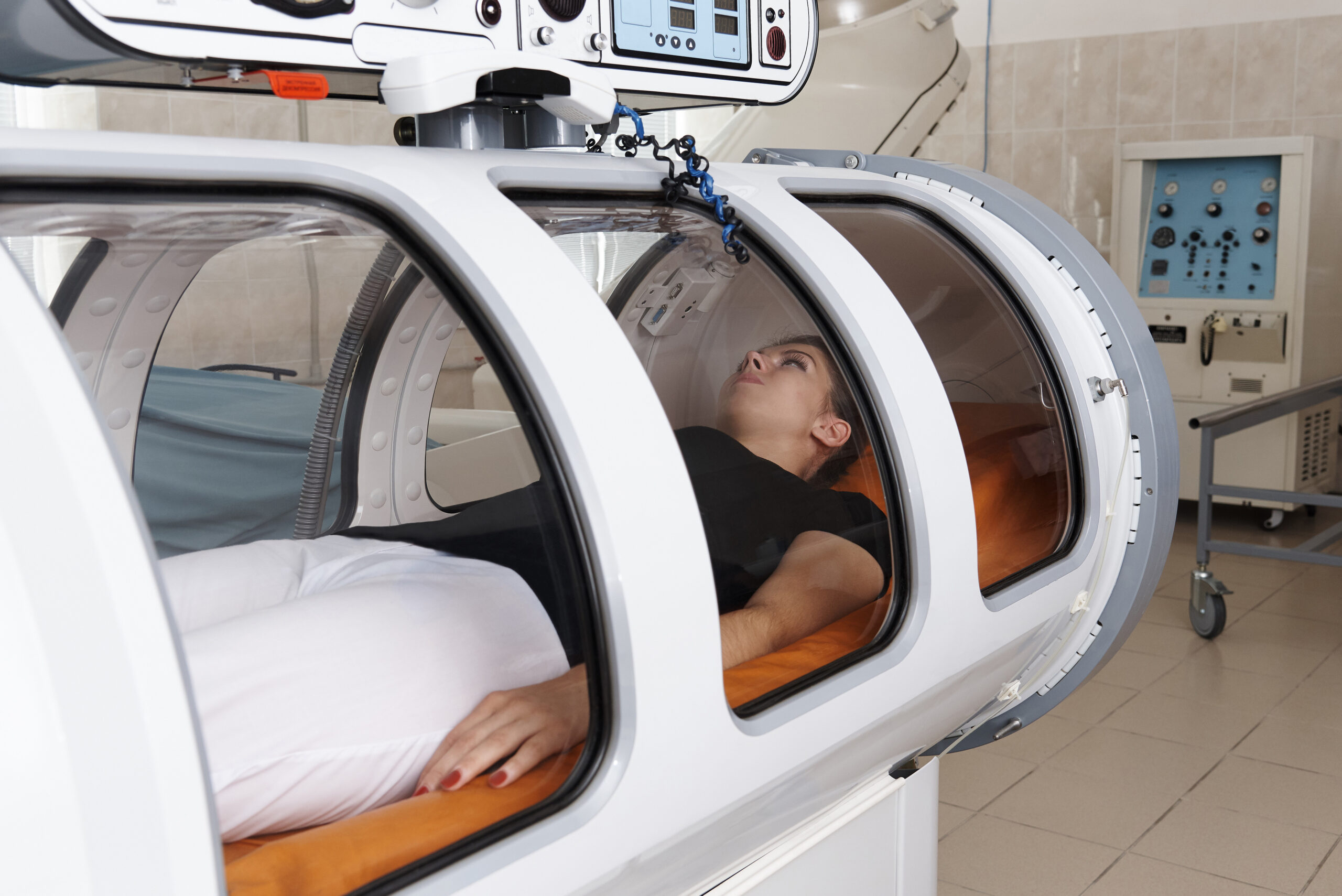
Hyperbaric oxygen therapy, or HBOT, has been around for a long time. Most people used to associate it with divers or wound care clinics. Now it is showing up in very different conversations around recovery, inflammation, cognitive health, and longevity.
Patients ask me about it much more now than they did even a few years ago. Part of that is because wellness clinics and home-use chambers have become easier to access. But I also think people are paying more attention to recovery in general.
What HBOT Actually Is
HBOT is essentially a way to increase oxygen delivery throughout the body.
Normally, oxygen travels through the bloodstream attached to red blood cells. HBOT changes that a bit by increasing pressure inside the chamber, which allows oxygen to dissolve more directly into tissues. The idea sounds simple, but oxygen is involved in a number of healing processes. These processes depend on oxygen functioning properly:
- tissue repair
- circulation
- collagen production
- immune function
- energy production
- recovery after injury or surgery
When tissues are inflamed or injured, recovery can slow down partly because oxygen delivery becomes less efficient. That is really the premise behind HBOT.
Oxygen and Recovery
One reason HBOT has gained attention in recovery and longevity medicine is because of how closely oxygen is tied to cellular function. Mitochondria, which are responsible for producing energy inside cells, rely on oxygen to generate ATP.
Researchers have more recently been exploring HBOT in areas like:
- wound healing
- surgical recovery
- inflammation
- brain injury
- concussion recovery
- cognitive recovery
- athletic recovery
There is also ongoing research looking at circulation, blood vessel formation, and tissue healing pathways. Some of the newer interest around HBOT centers on inflammation. We are learning more and more about how chronic inflammation affects long-term health and aging overall.
HBOT Has Been Used in Medicine for Decades
A lot of people assume HBOT is a newer wellness trend, but it has a long history in traditional medicine.
Historically, it has been used for:
- decompression sickness in divers
- carbon monoxide poisoning
- radiation injury
- severe infections
- non-healing wounds
- diabetic ulcers
- skin graft healing
This is still where the strongest evidence exists today.
Wound healing in particular has been one of the best-studied uses because oxygen is critical for tissue repair and collagen production. If tissues are not receiving enough oxygen, healing can slow down significantly.
Over time, researchers started asking whether improved oxygen delivery could potentially support recovery in other parts of the body as well. That is where some of the newer applications started gaining attention.
Not All Chambers Are the Same
One thing that often gets lost online is that not all hyperbaric chambers are the same.
The soft-shell chambers often marketed for home use or wellness clinics are very different from the higher-pressure medical-grade systems used in hospitals and research settings.
The lower-pressure chambers are more accessible and easier for ongoing use. Some people use them regularly for recovery or general wellness routines.
There is some emerging research around these systems, but the strongest body of evidence still comes from the higher-pressure medical-grade chambers. A lot of the studies people reference when discussing HBOT benefits were done using those stronger systems.
That does not necessarily mean lower-pressure chambers cannot be beneficial. It just means we still have more to learn, especially outside traditional medical uses.
What We Know So Far
There are certain HBOT applications that are already well established medically. Others are still being studied more closely.
The strongest evidence today supports HBOT for:
- non-healing wounds
- radiation injury
- decompression sickness
- carbon monoxide poisoning
- certain severe infections
- surgical graft healing
Then there are the areas generating growing interest right now:
- cognitive health
- concussion recovery
- athletic recovery
- post-operative healing
- inflammation support
- longevity-focused wellness
Some of these areas have encouraging early data, but larger and longer-term studies are still needed in many cases.
Why Athletes and Recovery Clinics Are Interested
Part of HBOT’s visibility has also come from the athletic and recovery world.
Professional athletes and recovery clinics have increasingly incorporated hyperbaric chambers into recovery routines with the goal of supporting tissue repair and recovery after intense physical stress. Patients are often hearing about HBOT through podcasts, athletes, or wellness spaces long before they hear about it in a traditional medical setting.
My Own Experience With HBOT
I have personally used HBOT following gum surgery and noticed faster healing time with very minimal swelling and bruising afterward. Obviously that is anecdotal, not clinical data, but encouraging nonetheless.
It also made me more interested in the role oxygen delivery may play in recovery and healing.
And I think that is why many people are interested in HBOT right now. Not necessarily because they see it as a cure-all, but because they are looking for ways to better support healing.
Who Might Consider HBOT?
Context matters whether someone is considering HBOT for:
- surgical recovery
- injury healing
- inflammation support
- athletic recovery
- cognitive recovery
- wound healing
- general wellness
The type of chamber matters too, especially when looking at the research.
Why Recovery Is Getting More Attention
What I find most interesting is the broader shift happening around recovery.
For a long time, most medicine focused on treating disease. Now there is much more attention being paid to how the body heals, adapts, and recovers over time. I believe that is part of why therapies like HBOT are getting more attention now than they did in the past.