The term Blue Zones has been used to describe places where people live long and healthy lives. What exactly does it take to live a long and healthy life? What is the science and the secret behind longevity and life extension? In this series, we are talking to medical experts, wellness experts, and longevity experts to share “5 Things You Need To Live A Long, Healthy, & Happy Life”.
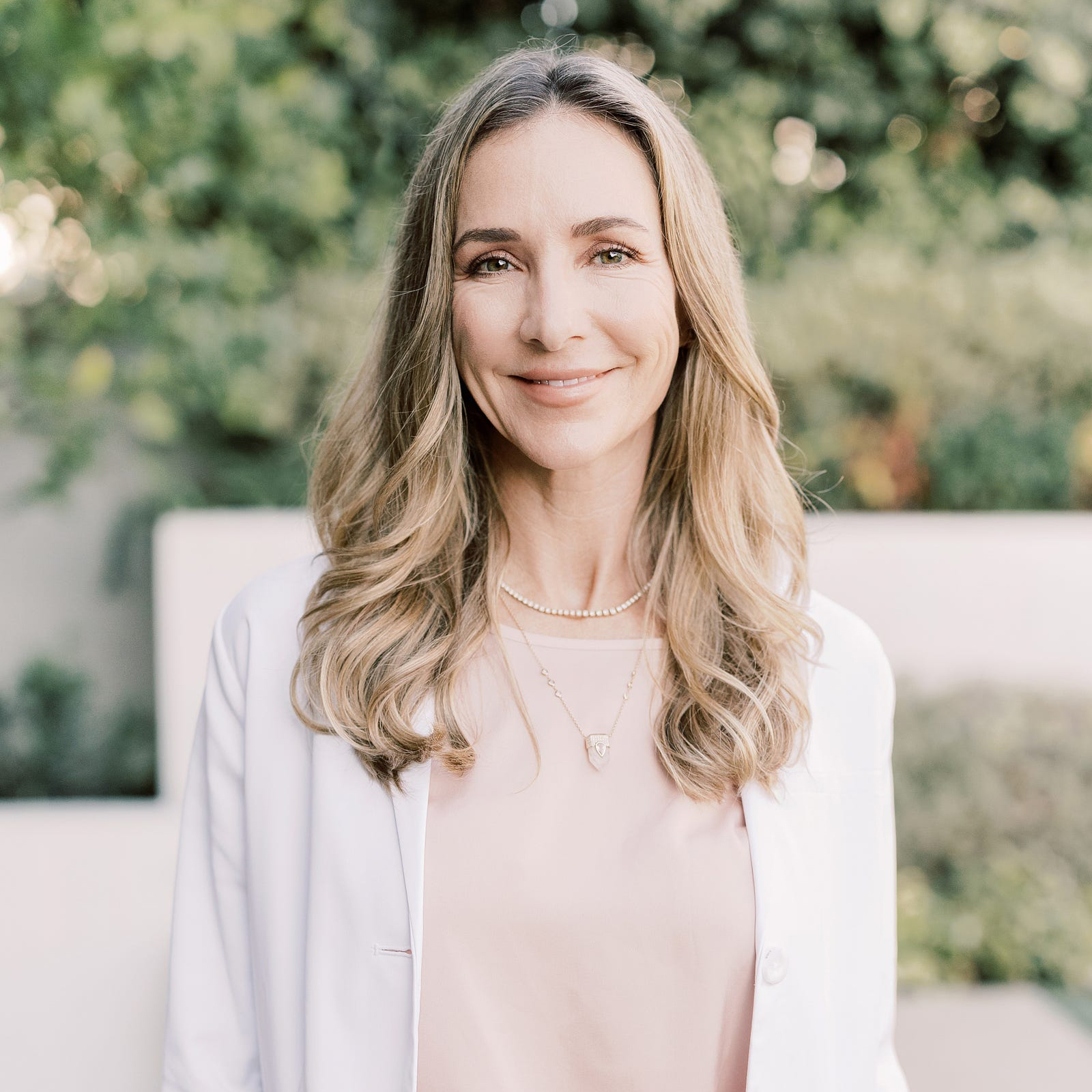
As a part of this series, we had the pleasure to interview Dr. Jennifer Timmons.
Dr. Jennifer Timmons, MD is a Longevity Physician and the Founder and Medical Director of Timmons Wellness, a concierge medical practice providing hyper-personalized healthcare. With over 10 years experience practicing traditional primary care at UCLA Health — along with advanced training in Functional and Integrative Medicine, Precision Medicine, and Longevity Medicine — Dr. Timmons is committed to helping people enjoy longer, healthier lives through a unique customized care model.
Dr. Timmons earned her medical degree from the University of Southern California and completed her residency training in Family Medicine at the University of California, Los Angeles. She spent over a decade practicing primary care at UCLA Health, and completed continuing education at the American Academy of Anti-Aging Medicine and the Institute of Functional Medicine. She is known for her proactive, data-driven approach to health and disease prevention, alongside her dedication to living by example and following the same testing and practices she recommends to clients.
While her time in conventional healthcare shaped her clinical expertise, it also revealed the limitations of time-constrained, insurance-based medicine. Not only does it contribute to physician burnout, but it also restricts the ability to investigate root causes over symptoms, and underserves patients with complex concerns. In 2023, Dr. Timmons launched Timmons Wellness, an alternative care model centered on deep personalization and ongoing access, restoring a strong doctor-patient relationship akin to having a “doctor in the family.”
With a small patient panel, Dr. Timmons is able to provide comprehensive testing, detailed data analysis, and focused one-on-one attention to her clients. She provides each patient with the curiosity, time, and energy needed to research their best individual care, from proven strategies to innovative technologies like peptides and hormone therapy. Knowing the financial barriers of entry for the concierge care model, she is passionate about sharing her ample knowledge publicly through digital educational content on social media. Dr. Timmons’s specialties include hormone optimization, metabolic and cardiovascular health, inflammation, menopause, precision testing, sleep optimization, gut health, weight management, and proactive disease prevention.
For Dr. Timmons, extending your life is not about having more years, but about having more healthy years. Through Timmons Wellness and her free educational content, she teaches people how to move beyond basic wellness toward longevity medicine, and build sustainable habits for full, active lives.
Thank you so much for joining us! Our readers would love to “get to know you” a bit better. Can you tell us a bit about your ‘backstory’?
I have wanted to be a doctor since as long as I can remember. Even at age 3 I loved “taking care of my dollies.” When I was 10, I told my teacher that I didn’t need to learn to have nice handwriting because I was going to be a doctor when I grew up. Then when I was 12, I spent a year living in India helping my mother work on a mobile hospital bus. The experience of delivering medicine in a different culture created a lifelong foundation of curiosity and empathy, and reinforced my desire to be a doctor and help those in need.
Can you share with us the most interesting story from your career? Can you tell us what lessons or ‘takeaways’ you learned from that?
The most interesting story from my career is how I came to shift and get interested in taking a more holistic approach to medicine. I was working at UCLA in primary care, and I was seeing so many patients who were concerned about their health. They were coming to their annual physical wanting to get labs drawn. I realized that the main pieces of advice they needed from me weren’t labs, but tips about healthy diet, exercise, good sleep and stress management. This was true across cases, whether to treat chronic conditions like high blood pressure or diabetes, or just to maintain their health. I did not learn anything about these areas in medical school. This is the most interesting point in my career because I realized I was going to need to learn these things on my own in order to truly help people stay well, and not just treat people once they got sick.
None of us are able to achieve success without some help along the way. Is there a particular person who you are grateful for who helped get you to where you are? Can you share a story about that?
My mom. She’s a nurse practitioner, and I am grateful to her for helping me along my journey because of two things. First, she gave me exposure to medicine, and I fell in love with the idea of helping and healing people. She was a lay midwife when I was a kid, and I got to go to a home birth. Then she went back to school and became an RN. After school, I’d often sit in the nurse’s station and do my homework while she was working. I loved being in the hospital and getting to see how everything worked. Second, when I was in high school, she decided to go back to school to become a nurse practitioner. Not only did my mom give me examples of healing and medicine, but she also showed me what being a lifelong learner looked like, and to not be afraid to go achieve your dreams. Watching her go through her schooling throughout my childhood was very inspiring, and inspired me to go for my dreams.
You are a successful leader. Which three character traits do you think were most instrumental to your success? Can you please share a story or example for each?
Curiosity — I have a natural curiosity and drive that helps me research and go the extra mile for each individual patient. Kindness — I have a warm and approachable nature and truly enjoy listening to others, which is key to providing a personalized healthcare practice. Leading by example — I take every test and tip myself before recommending them to clients.
Ok, thank you for all that. Now let’s shift to the main focus of our interview about health and longevity. To begin, can you share with our readers a bit about why you are an authority in the fields of health, wellness, and longevity? In your opinion, what is your unique contribution to the world of wellness?
I became an authority in this field after I decided to take on my own education that went beyond my board certification in family medicine. I had practiced primary care, but I felt like that was “sick care”, not “well care.” I went back to training through the Academy of Anti Aging Medicine and the Institute of Functional Medicine, and did a lot of reading and learning on my own. I opened my own practice and started treating patients, and I’ve seen the powerful transformation that can occur through the principles of longevity medicine, preventative care and lifestyle medicine in my patients. My unique contribution to the world of wellness is my passion for continual learning and applying what I learn to medicine. I’m constantly studying, learning and keeping up with what’s new. I then adopt it into my own life, try it out on myself, see how it works, and then implement it with my patients. Medicine can be a clunky, slow moving machine when it comes to change, but there’s constant innovation going on, new studies coming out, and new technologies that have really good data. It takes a while for those to be implemented. But since I’m not part of a huge bureaucratic health system, I’m able to be nimble and apply what I’ve learned and utilized myself with my patient population.
Seekers throughout history have traveled great distances and embarked on mythical quests in search of the “elixir of life,” a mythical potion said to cure all diseases and give eternal youth. Has your search for health, vitality, and longevity taken you on any interesting paths or journeys? We’d love to hear the story.
I’ve definitely been on some interesting paths. Like I said, all the wellness things I’m recommending, I like to try out on my own. I’ve tried the gamut, from breath work to going to seminars in Tulum, Mexico, to doing longevity-based IV infusions, to experimenting with peptides. I’ve also been all over the country to different longevity, biohacking, wellness seminars and conferences.
Based on your research or experience, can you please share your “5 Things You Need To Live A Long & Healthy Life”? (Please share a story or an example for each)
1. Building and maintaining muscle.
You lose about 5–8% of muscle mass per year starting at age 35. Having enough muscle is key to longevity. It protects your joints and your ability to move and do the things you still want to do. Muscles also are an endocrine organ, releasing myokines that interact with your hormonal system.
2. Having strong social connections.
Harvard recently did a long-term study where they followed people for many years. They found that the #1 determinant of longevity wasn’t anything socioeconomic, diet or exercise-related. It was having strong social connections. And not just within your family, but also having connections within your community is super important.
3. Practicing gratitude.
Gratitude is one of the predictors of happiness, as well as a predictor of longevity. It’s important to have a strong gratitude practice and a grateful outlook on life.
4. Eating mostly plants.
We know from the blue zone data that a plant-forward diet is going to lead to the longest lifespan. Mediterranean diets, Japanese diets, blue zone diets — what all of them have in common is being plant-forward. I always recommend to my patients that 75% of their plate should be plants: fruits, vegetables, whole grains, beans. This is going to ensure you have enough fiber, which is also linked with longevity, and enough phytonutrients, which you need to have strong building blocks.
5. Moving your body every day.
Independent of maintaining muscle, which I listed as number 1, moving your body and staying active is key. It’s not just going to the gym for an hour, but building movement into your lifestyle, and doing things that you enjoy that are active and not just sitting. They say now sitting is the new smoking. Our lifestyles where we’re sitting for 8 hours a day is a bigger risk factor for death than smoking.
Can you suggest a few things needed to live a life filled with happiness, joy, and meaning?
You need to have strong social connections. We are social animals. We’re wired for being social, and in order to be fulfilled and happy, we cannot be lonely. Second, find meaning in life. Finding some way that you contribute to the world has been shown in studies to lead to feeling a sense of joy. Lastly, have a gratitude practice. Be a person who sees the cup half full. No matter what you have, if you’re grateful for it, you have enough. I love that quote, and it’s definitely true.
Some argue that longevity is genetic, while others say that living a long life is simply a choice. What are your thoughts on this nature vs. nurture debate? Which is more important?
You may be surprised to hear that it’s primarily nurture. Yes, you are thrown a genetic lottery that does have some impact. But the biggest impact is your epigenetics, or the genes that get turned on and off based on the lifestyle that you live. For example, what we eat is information for our genes, and we turn on longevity genes based on the inputs we’re feeding. It’s also how we move our body, the thoughts we think, stress. Longevity is primarily nurture, because the nurture affects your nature, aka your genes.
Life sometimes takes us on paths that are challenging. How have you managed to bounce back from setbacks in order to cultivate physical, mental, and emotional health?
I try to focus on the basics. It’s all about consistency over intensity. Start small. Maybe you’re not doing anything at all to move your body anymore after an injury. Start with 5 minutes a day of walking and build from there. What this does is the consistency tells your brain that I am someone who moves. I got this. It builds confidence. It also builds up over time. For two weeks, 10 minutes every day is going to be superior to just doing, say, two 1-hour workouts. They may be the hardest workouts you’ve ever done, but then you’re never able to do more. It’s all about consistency over intensity.
Can you please give us your favorite “Life Lesson Quote”? Do you have a story about how that was relevant in your life?
I love the quote that you can have 1,000 problems in life until you have a health problem. And then you only have one. This highlights that health is really our greatest wealth. You may be worrying about a million things, but once you have to worry about your health, that becomes your primary concern. In my own life, I haven’t had a major health problem I’ve had to face. But understanding this helps me impart the knowledge to my patients that helps them focus on their health and wellness before they have to get sick and learn the hard way.
You are a person of enormous influence. If you could start a movement that would bring the most amount of good to the most amount of people, what would that be? You never know what your idea can trigger. 🙂
I would teach kids how to cook at home and about proper nutrition. I think this would bring the most good to the most people because it would be generational. Kids would learn, then they’d teach their kids, and it would change our whole society. Right now, kids are getting poor examples of food in their school lunches. There are many kids in our country who don’t have access to healthy food. There are food deserts. We see places like Japan have an active nutrition program in school, and they’re teaching kids how to prepare healthy meals and understand what is a healthy meal, what it consists of. Everything is freshly prepared without any preservatives. So I’d teach kids on a whole systems-wide level, so kids could have access to and learn about healthy food.
What is the best way for our readers to continue to follow your work online?
You can follow me on my website or social media: timmonswellnessmd.com · Instagram · LinkedIn · TikTok
This was very inspiring. Thank you so much for the time you spent on this. We wish you only continued success.