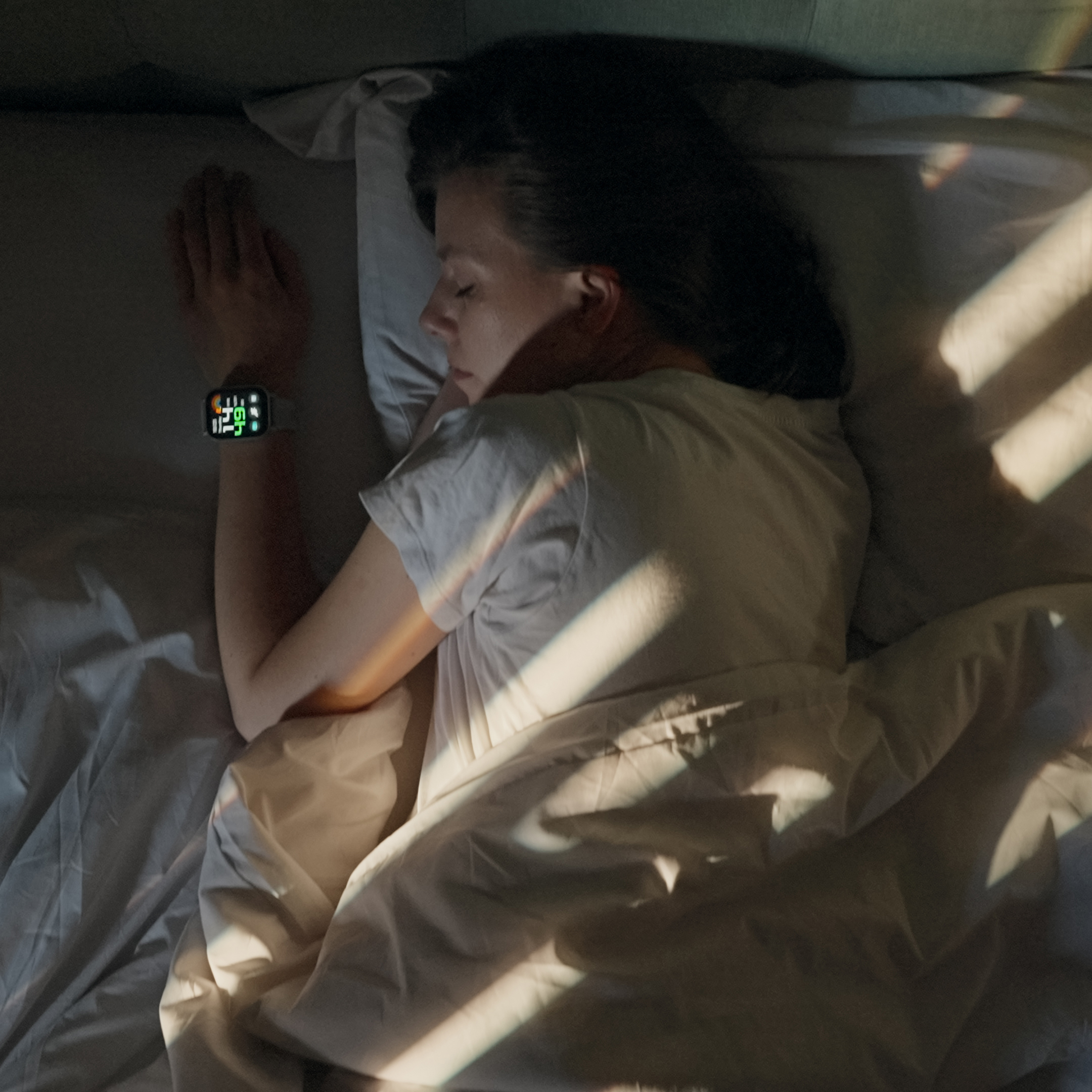
Today, in a sentence that definitely won’t shock you: my sleep changed after having my children. But perhaps not in the way you would expect. After a challenging breastfeeding experience with my first daughter that greatly impacted my mental health, I decided to give formula from birth to our second daughter.
This decision was better for my mental state as a postpartum mom, and it allowed my husband and me to play to our strengths: after more than a decade as a consultant, he was used to functioning on little sleep. I, on the other hand, need a solid 8 to 9 hours to feel well-rested. He took nights, I took the early mornings—and somehow, we were gifted two kiddos who slept through the night by 16 weeks.
Even with this master plan meant to leave both of us healthier and happier, I noticed myself struggling more and more with sleep. And by that, I mean nearly every aspect of it: falling asleep, waking in the middle of the night to go to the bathroom, and waking early—not due to a cry from my child, but my own brain, somehow wide-awake and alert at the crack of dawn.
As we headed into a New Year, I made 2026 my year where I would learn more about what impacts my sleep and what can help improve its quality. I spoke with several experts, including Dr. Jennifer Timmons, MD, a longevity physician and the founder and medical director of Timmons Wellness, a concierge medical practice providing hyper-personalized healthcare.
She explained my observations weren’t random, but on trend for women my age. As she explained, sleep starts to shift for women typically around 35 and beyond due to hormones and, of course, perimenopause. “Perimenopause typically starts in the late 30s and extends into your 40s. It can make ovulation less predictable, and your hormones start to fluctuate. This going up and down in an uneven pattern is what causes some sleep shifts. For example, progesterone becomes less predictable and decreases,” she explains. “Progesterone has a GABA-like effect, which is a calming hormone that helps you get into deeper sleep and stay asleep consistently throughout the night.”
She also noted that many become sensitive to cortisol in their late 30s, which can be caused by everything you can think of: work stress, wrangling young children, and more. “Chronic elevated cortisol from high stress can lead to cortisol peaking too late in the day, making it hard to fall asleep. Or it can peak too early in the morning, leading to a 3 or 4 a.m. wake-up,” she adds.
So, what’s a 37-year-old woman to do to get some better shuteye? These habits that are backed by science and experts to actually make a difference:
I always wear a sleep mask.
Truthfully, this isn’t a ‘new’ habit for me, but it’s one that I’ve become far more particular about with age. I started sleeping with a sleep mask when I was traveling for a year in my 20s. Having the consistency of a dark room, no matter what time zone I was in, was super helpful for my sleep. Now that I’m a bit more focused on comfort, I’ve started to find padded, cozy sleep masks that are higher quality and actually block out all light (especially our neighbor who insists on having their floodlights on every night).
I asked Dr. Michael J. Breus, PhD, the SleepDoctor, about the benefits of wearing a sleep mask. He said while, unfortunately, when he looks at sleep literature, direct randomized controlled trials on basic eye masks are limited, the underlying science is very strong. “Blocking light at night protects melatonin, stabilizes circadian timing, and improves sleep continuity,” he explains. “Meta-analyses of light-based interventions consistently show that reducing nighttime light exposure improves sleep quality and reduces sleep disturbance. Even low levels of light at night, like hallway glow or device light, can suppress melatonin, raise heart rate, and fragment sleep.”
He recommends choosing a soft, contoured mask that doesn’t press on your eyelids or lashes, and trying it nightly for two weeks to see if it makes a difference. “A sleep mask is simple, low-cost, and physiologically aligned with how your circadian system works. Sometimes the smallest environmental tweak produces outsized sleep gains,” he adds.
Kitsch Contour Satin Sleep Mask
This mask blocks everything out without pressing on my eyes, which matters more than I expected. I can blink naturally, shift positions, and still feel comfortable all night. It’s become especially essential when we travel or when my routine gets thrown off. In this stage of life, deeper sleep feels like real self-care, and something this simple has made a noticeable difference.
I started taking magnesium at night.
Many of my friends—and my mother, the supplement queen—recommended giving magnesium a shot to help me fall asleep. As someone who typically waits until I absolutely have to take ibuprofen for a headache, relying on a supplement or medication to sleep felt like a stretch for me. Dr. Breus explained the science is limited but worth considering.
He says magnesium tends to matter most if you have poor sleep, anxiety, muscle tension, or a marginal dietary intake. He recommends starting with magnesium-rich foods like nuts, seeds, legumes, whole grains, and leafy greens. Then, from there, a typical trial is 200 to 350 mg of elemental magnesium (glycinate, citrate, or L-threonate) taken 1–2 hours before bed for 4 to 8 weeks, assuming normal kidney function.
I started supplementing with these types of magnesium starting the first week in January, and both have helped me feel sleepier and drift away more easily before bed. I’m not sure if it’s fully the magnesium, but coupled with my other sleep habits, I do feel a difference.
HUM Dream Team Magnesium Powder for Nighttime
I was drawn to this one because it doesn’t rely on melatonin, which I’ve never loved, and instead uses magnesium bisglycinate, L-theanine, and tart cherry to gently support relaxation. I take it about an hour before bed while I’m finishing up the kitchen or doing my skincare routine, and it feels like a signal to my body that we’re winding down.
Pure Encapsulations Magnesium (Glycinate)
I really prefer a no-frills, no added ingredients kind of supplements, and this one felt aligned with my personality: simple, well-sourced, and free from a bunch of extra ingredients I don’t need. I take it about an hour before bed and I’ve noticed I feel a little less tense and more ready to settle. What I appreciate most is that it supports more than just sleep: stress, muscles, and overall nutrient metabolism, all without any tummy upset that some supplements give.
I upgraded my comforter.
My husband is from Denmark, and since my first pregnancy, we’ve adopted the Scandinavian tradition of sleeping with separate comforters. While at first, I was worried it would be strange to not share for a married couple, I’ve honestly come to love it. He has his space, I have mine, and we both sleep better for it.
And part of that is because we have different temperature needs at night: I run hot, he runs cold. Dr. Breus says thermoregulation products is something all women should look at more closely in their late 30s, since they can make a significant impact on sleep quality. “When you align your bed’s temperature with your body’s natural cooling rhythm, you’re working with your biology and that’s a powerful, science-backed way to upgrade your sleep environment,” he explains. This can include cooling toppers, sheets, comforters, beds and pillows.
down, etc. premium white goose down comforter, summer weight
Switching to this summer-weight comforter has helped create that breathable, light layer that keeps me comfortable all night. It’s the same brand used in many luxury hotels, which makes sense because it has that airy, cloud-like feel without trapping heat. For me, better sleep has meant thinking about the full environment, and this has been one of the upgrades that has helped. Plus, it’s made me feel like I’m sleeping at a hotel, even if it’s just my bedroom with my two daughters calling from the next room.
I swapped my iPhone for a journal
The hardest routine change that has driven the greatest impact for my sleep is putting my iPhone down at least an hour before bed. It’s something I’ve read about, reported about and told myself I would try, but it wasn’t until the start of this year that I made it happen. And wow, what a difference it makes in feeling sleepy and not overstimulated. Chrissy Lawler, a licensed marriage and family therapist and founder of The Peaceful Sleeper, explains screens can delay the body’s natural wind down, making ti harder to fall asleep and easier to wake overnight. My husband and I used to scroll TikTok before lights out, which sure, felt like we were shutting off our brains, but really it was having the opposite impact.
Inside Then Out ‘Better Every Day’ Journal
This journal has become part of my wind-down routine, a way to pause, check in and get thoughts out of my brain and onto paper before I turn off the lights. The guided prompts make it easy, especially on nights when I’m tired and don’t want to overthink it. Creating that small buffer between the day and sleep has helped me settle faster, and over time, it’s made bedtime feel less reactive and more intentional.
Hatch Restore 3
I didn’t realize how much late-night scrolling and bright light were keeping my brain wired until I replaced it with this. Now, I start a simple wind-down routine (dim light, soft sound, sometimes a short meditation) and it genuinely signals to my body that the day is over. The sunrise alarm has been just as impactful; waking up to gradual light instead of a jarring sound feels noticeably gentler, especially in a season of life where I’m already overstimulated.
If I wake up early, I get up and exercise.
Another biggie that’s been a dramatic shift from my typical habits has been listening to my body when maybe I’m actually ready to get out of bed, even if I would rather not. Sometimes my body naturally is wide awake at 5:30 a.m. or 6 a.m., especially if I went to bed on the earlier side the night before. While I’d love to stay sleeping until 6:30 or even 7 a.m., I’ve tried to pay attention to my sleep cues in the same way I pay mind to my children’s. Lawler says it’s an important shift to make: “If you’re awake and alert, get out of bed. Lying there tossing and turning trains the brain to associate the bed with stress and overthinking,” she says.
For me, I take the early wake-up as an opportunity to go ahead and get in my workout for the day. Exercise can also help regulate sleep, especially working out in the morning vs. the evening. It’s always been a part of my mental health must-haves, but now it also contributes to my sleep, which is an added bonus. For me, exercise focuses on low-impact cardio and weight lifting, as I get into my late 30s and maintaining bone density matters. Some early mornings, I might hop on my stair climber or put on a weighted vest and walk on my treadmill. Other days, it means a heavy lifting session, which gets me pumped for the day ahead.
Echelon Stair Climber Sport
I love this stair climber because it’s just so simple. It’s compact enough to live in our house without taking over the room, which removes the excuse factor, and the adjustable resistance lets me push myself without wrecking my joints. Even 20 minutes of steady climbing helps burn off stress that would otherwise follow me to bed. In this season of life, I’ve learned that how I start my morning directly affects how well I sleep, and this has made consistency realistic.
Lifepro FlexVest Adjustable Weighted Vest
I don’t always have time for a full gym session between when I wake up and the kids wake up, so being able to throw this on for a treadmill walk, a quick stair workout or even while doing things around the house makes consistency realistic. I like that I can adjust the weight one pound at a time, which lets me push myself without overdoing it. The added resistance leaves me feeling physically spent in the best way, the kind of fatigue that makes falling asleep easier at night.