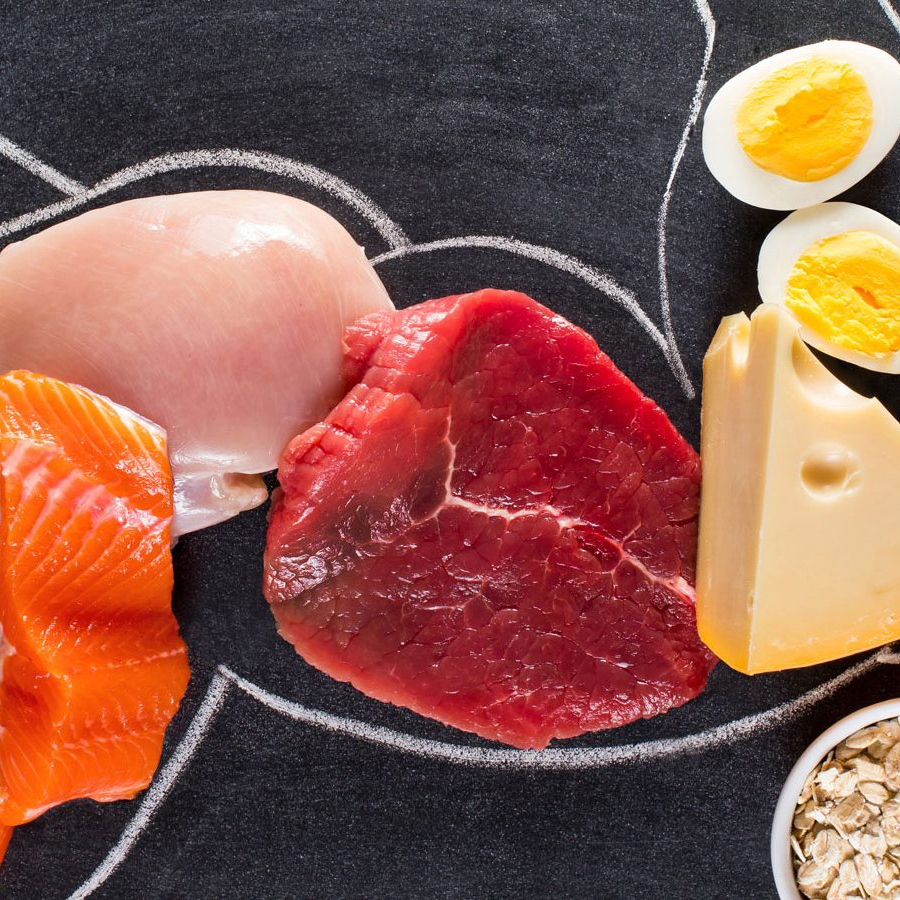
A trip down any grocery store aisle makes one thing clear: Protein is the latest nutrition buzzword. From chips and cereal to pasta, coffee, and even ice cream, food manufacturers are adding extra protein to just about everything, often marketing these products as healthier choices.
For people over age 55, being conscious of protein intake is a major part of maintaining good health; protein needs generally increase with age in order to preserve muscle mass. But according to Janna Neitzel, a registered dietitian and certified dietitian nutritionist with the Stram Center for Integrative Medicine in Delmar, the source of that protein matters as much as the amount.
Protein and Healthy Aging
Starting in our 30s or 40s, we lose as much as 8% of muscle mass per decade, the Cleveland Clinic reports, in a process called sarcopenia. While we can’t entirely prevent this natural part of the aging process from occurring, working to slow its progress can have a big impact on our long-term health.
“There has been study after study showing that more muscle mass is linked to longevity and improved independence, metabolic health, cognitive health and a lower risk of falls,” Dr. Jennifer Timmons, a longevity physician and founder of Timmons Wellness, recently told Super Age magazine.
The impacts of sarcopenia can be reduced with a combination of two treatments: physical activity (particularly strength training), and increasing protein intake. “It’s a ‘use it and feed it or lose it’ scenario,” Neitzel tells her clients, acknowledging that this can be difficult as our appetites and activity levels decrease with age.
How Much Protein Do We Really Need?
For years, the recommended daily allowance (RDA) was just 0.8 grams of protein per kilogram of body weight, but the USDA’s 2025-2030 Dietary Guidelines for Americans raised the recommendation to 1.2 to 1.6 grams of protein per kilogram of body weight. For older adults, Neitzel raises the bar even further. “The RDA is basically the bare minimum, not necessarily the amount recommended to preserve lean skeletal muscle and the amount to thrive,” she explains.
Ideally, this increase in protein should be distributed evenly throughout the day, and come from a variety of animal and plant protein sources. Realistically, that can be difficult to accomplish. A review by the Department of Nutrition at Case Western Reserve University found that while men over 60 are, on average, consuming the recommended amount of daily protein, women fall below their recommended intake ranges, and their protein consumption gets worse as they age. In her practice, Neitzel often finds the solution is gradually working toward a better nutritious meal consistency, and sometimes supplementation is the way to get there.
Supplementation in Foods
Some “high-protein” foods might be helpful in certain scenarios, but many of them are highly processed, loaded with added sugar, sodium or saturated fats, and may offer little nutritional advantage over their traditional counterparts. “I mean, every little bit does help,” Neitzel says about added protein in snack items, “but I think this is trying to make a health food out of potato chips. Let’s be real.”
Before blindly eating all the protein you can find, Neitzel wants everyone to take a second to consider how far from a whole food the protein source might be. If there are listed ingredients, how many are there, and how many can you pronounce? If there are lots of chemicals, the food item is heavily processed — and likely not as good for you.
This can get tricky when it comes to protein bars and shakes. Supplementation is helpful if you’re struggling with meeting your protein requirements throughout the day, especially if decreased appetite is an issue. But Neitzel warns that while protein bars or premade shakes are fine in a pinch, they’re not something you should rely on every day. Instead, if you need to supplement, the key is to find a protein powder you can add to meals or shakes.
The protein craze offers a huge advantage in the sense that we have so many options to choose from, but not all proteins are created equal. Different sources have different levels of bioavailability — meaning how easily our body can break them down and use them. Whey protein, for example, has high bioavailability, but some people don’t tolerate it well, experiencing gastric upset or increased inflammation.
Neitzel recommends that anyone seeking to add protein supplements should look for single-serving packet options and try a variety of them. “See if you like the texture, how it blends, if you like the flavor, and see how you digest it before buying a larger canister,” she advises.
Know the Risks
It’s always a good idea to consult with your doctor or a nutritionist before making any drastic changes to your diet. They may be able to guide you in terms of which protein sources will be easier to process, and which ones you should try to avoid. It’s also recommended that you try to audit your current protein intake before adding to it; too much protein can lead to health issues, particularly for those with preexisting kidney conditions.
Furthermore, we cannot overlook the fact that the FDA leaves it up to manufacturers to evaluate the safety and labeling of dietary supplements. A protein powder is a dietary supplement, so there’s no way to know whether it contains what manufacturers claim.
In 2025, a nonprofit called the Clean Label Project released a report about toxins in protein powders. As Harvard Health summarized, researchers screened 134 products for 130 types of toxins and found that many protein powders contained heavy metals (lead, arsenic, cadmium and mercury), bisphenol-A (BPA, which is used to make plastic), pesticides or other contaminants with links to cancer and other health conditions. Some toxins were present in “significant quantities.”
Not all protein powders that were tested contained elevated levels of toxins, thankfully, so your journey might start with researching the results on the Clean Label Project’s website.